NVIDIA SkillEvaluator
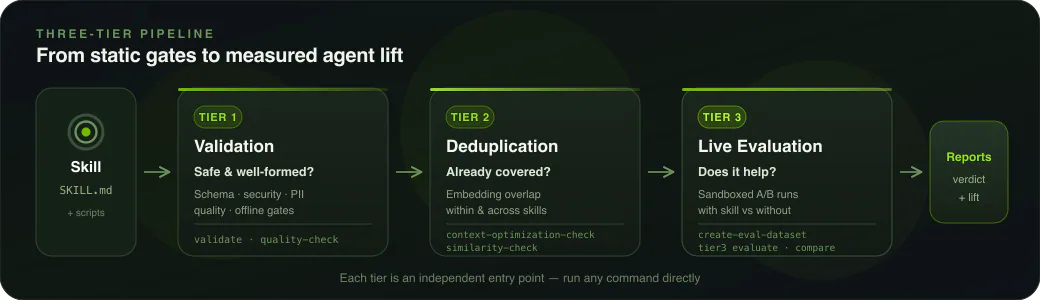
Evaluate AI agent Skills with NVIDIA’s open-source CLI: quality and security checks, overlap detection, and optional live agent comparisons.
Workflow originali per siti web, immagini, presentazioni e contenuti in movimento.
Evaluate AI agent Skills with NVIDIA’s open-source CLI: quality and security checks, overlap detection, and optional live agent comparisons.
Build evaluation datasets, run and grade agent traces, and investigate failures.
Give evidence-traceable feedback on scholarly works and audit rubrics used for low-stakes research assessment.
Use Roblox services, Instances, events, shared modules, server Scripts, LocalScripts, and validated remote requests.
Turn an existing benchmark or rubric into a SkillEvaluator custom grader or native Harbor task.
Compare technology choices using weighted criteria, costs and migration considerations.
Evaluates an ML GPU cluster for a cloud trial or acceptance test: environment dump, isolated newest PyTorch, matmul FLOPS (MAMF/MSMF) on every GPU while the others compute, intra-node all-reduce bandwidth and per-call latency of every collective, the same inter-node on every node you were given (omit those sections if there is only one node), fio on local disk and shared FS, dated markdown report.
Evaluate migration choices for Prisma 6 applications using MongoDB.
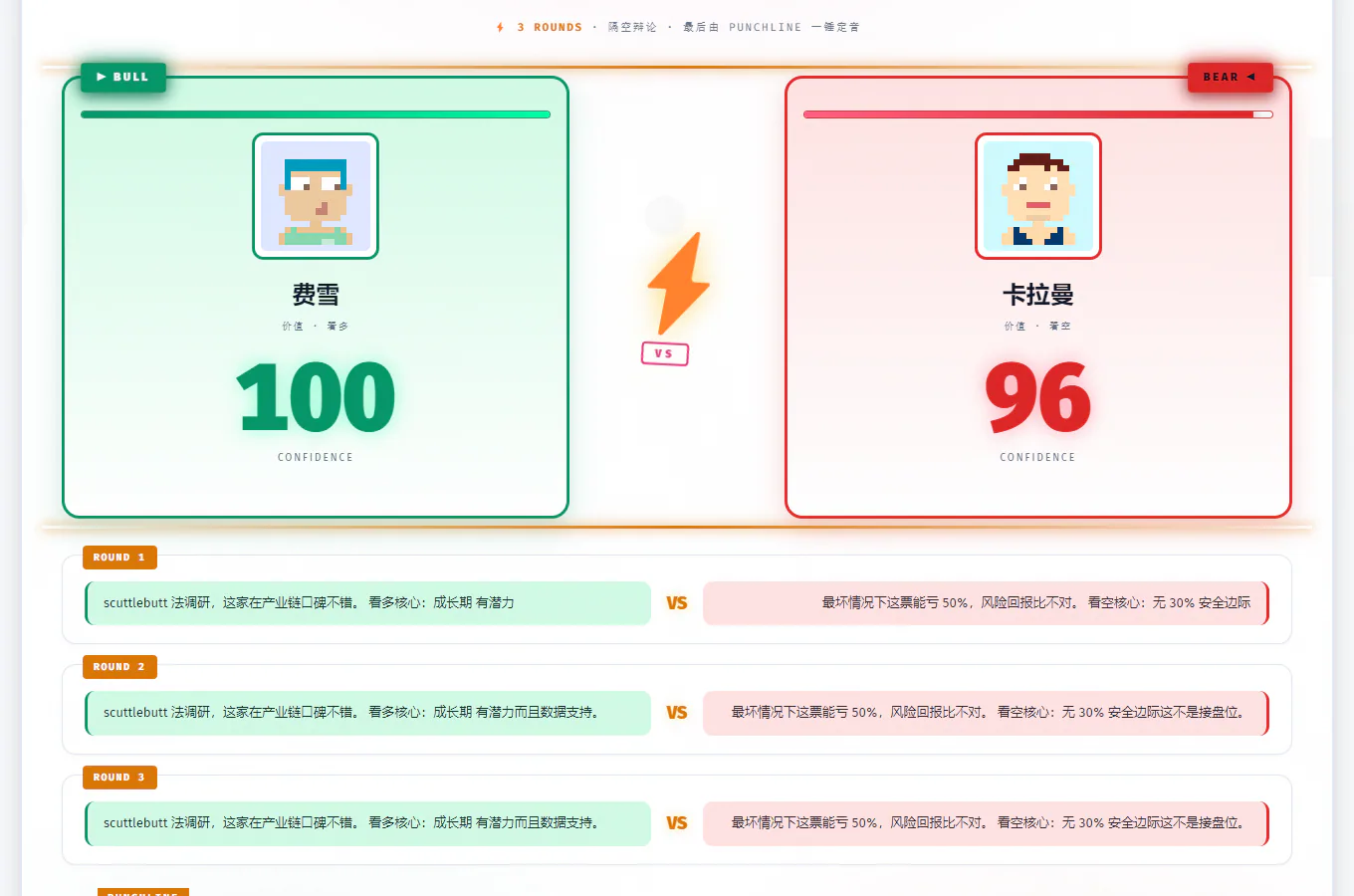
Run a structured deep-research workflow for an individual A-share, Hong Kong or US stock, combining multi-dimensional data collection, valuation methods, investor scoring and a Bloomberg-style HTML report.
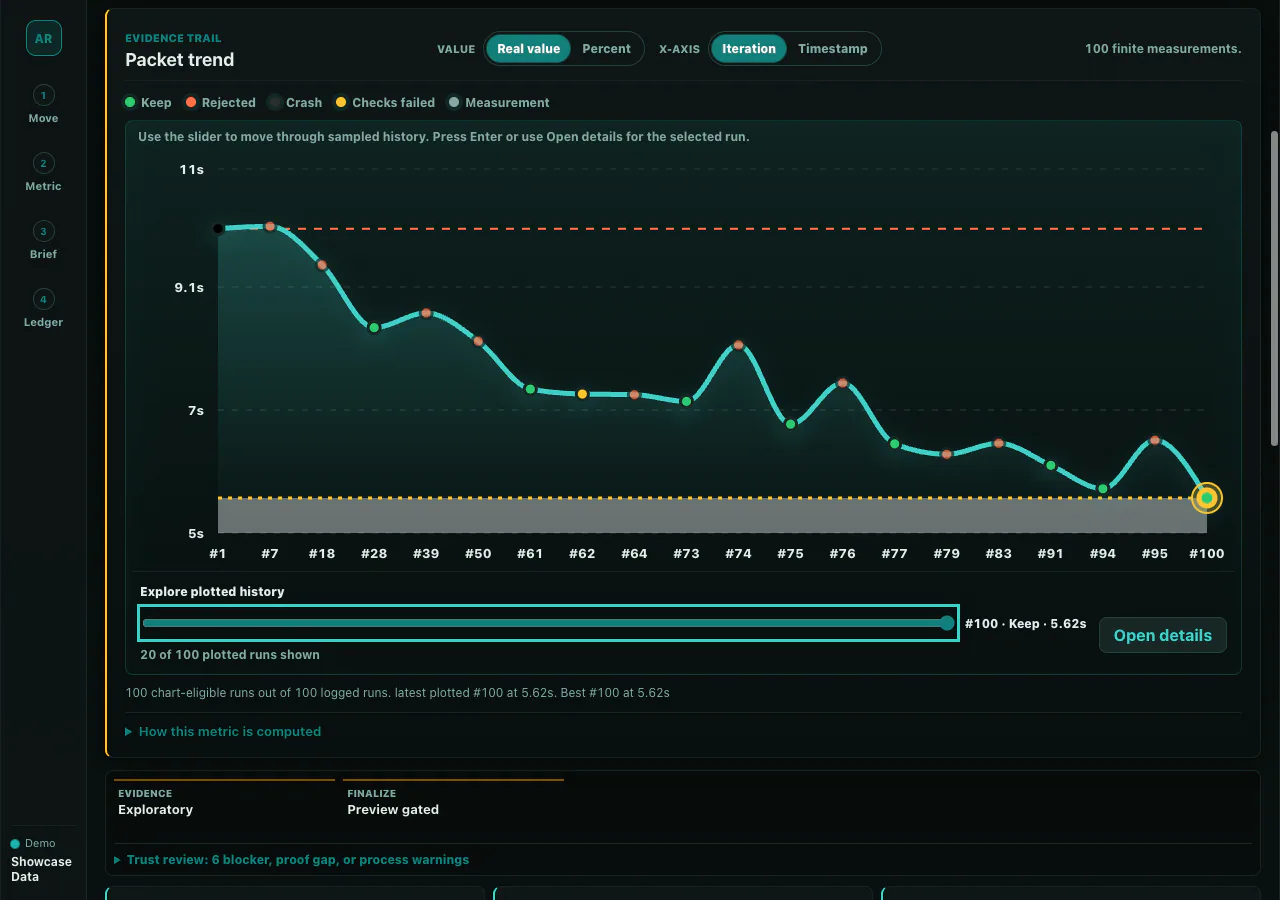
Run resumable improvement loops or bounded investigations in local projects with explicit objectives, allowed changes, budgets, and evidence.
Evaluate and improve interface usability using heuristic analysis. Use when the user mentions "usability audit", "users are confused", "form usability", "navigation problems", "Nielsen heuristics", "cognitive walkthrough", or "is this easy to use". Also trigger when reviewing a design for usability issues, improving form-completion rates, or evaluating information architecture and navigation. Covers Krug's laws, Nielsen's 10 heuristics, severity ratings, dark-pattern recognition, and accessibility. For visual design fixes, see refactoring-ui. For conversion-focused audits, see cro-methodology.
Organize repeated research experiments in a persistent hypothesis tree and evaluate candidates against a held-out baseline.
Route job evaluation, tailored CVs, application tracking and interview preparation through one workspace.
Use SHAP to explain a fitted model's predictions with feature attributions for individual rows, cohorts, or the full evaluation set.
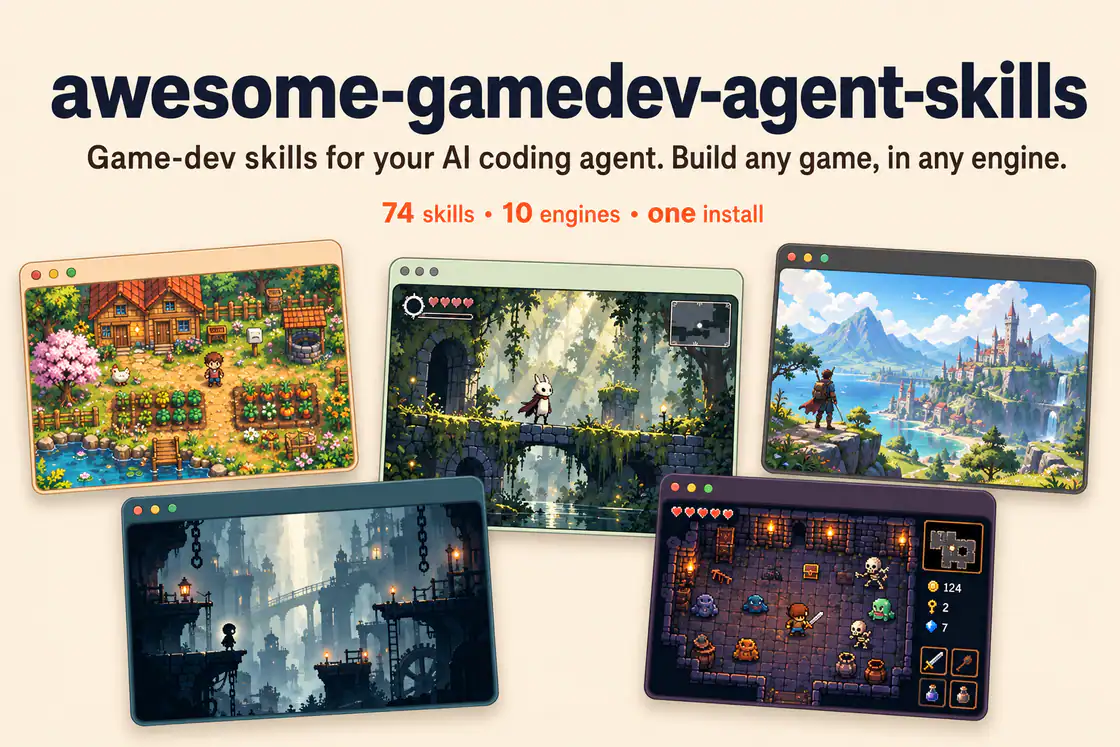
Create Lua game loops, delta-time motion, input handling, screen states, and window settings in LÖVE.
Discover Therapeutics Data Commons datasets and metrics, plan dataset splits, and evaluate model predictions against curated PyTDC benchmarks.
Train, save, and evaluate single-agent reinforcement learning policies with Stable Baselines3 in Gymnasium environments.
Fit and evaluate right-censored time-to-event models, and estimate cumulative incidence for competing risks with scikit-survival.
Build PyHealth research pipelines that turn electronic health records and other clinical data into model inputs, training runs, and patient-level evaluations.
Select, pair, and implement typefaces for web projects. Use when the user mentions "font pairing", "which typeface", "line height", "responsive typography", "web font loading", "type hierarchy", "variable fonts", "FOUT/FOIT", "typographic scale", or "the text is hard to read". Also trigger when choosing between system fonts and web fonts, optimizing font-loading performance, or designing readable long-form content. Covers readability evaluation, CSS implementation, and performance optimization. For overall UI design systems, see refactoring-ui. For dramatic typographic experiences, see top-design.
Evaluate useful calculators, generators and utilities as marketing assets with distribution plans.
Build scikit-learn pipelines for classification, regression, and clustering, with preprocessing, cross-validation, and model selection.
Design and implement MCP servers with discoverable tools, clear schemas and task-based evaluations.
Build and evaluate molecular property prediction workflows with DeepChem using SMILES, fingerprints, graph features, and MoleculeNet benchmarks.