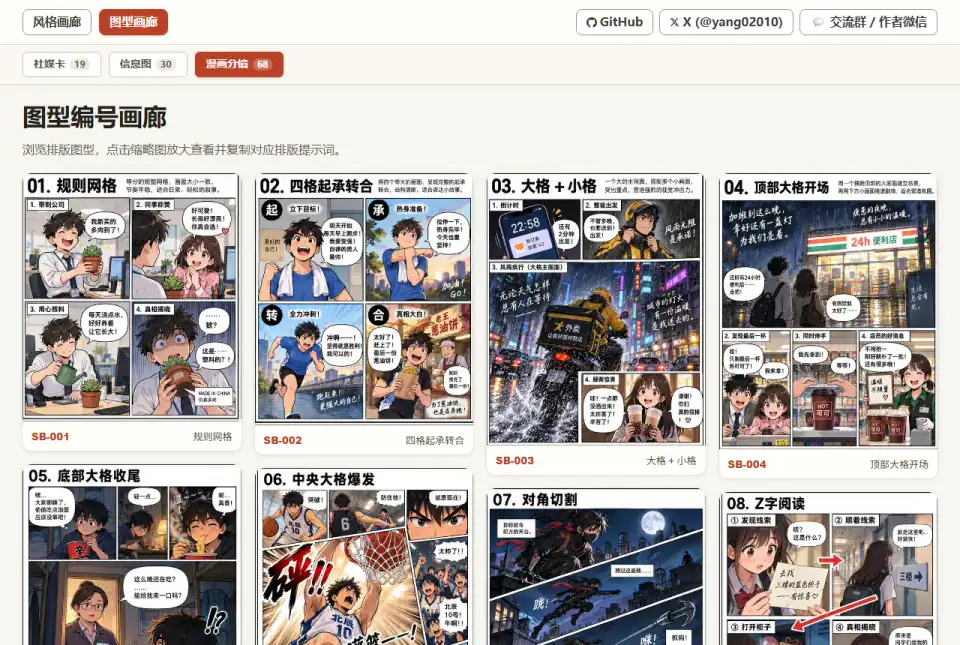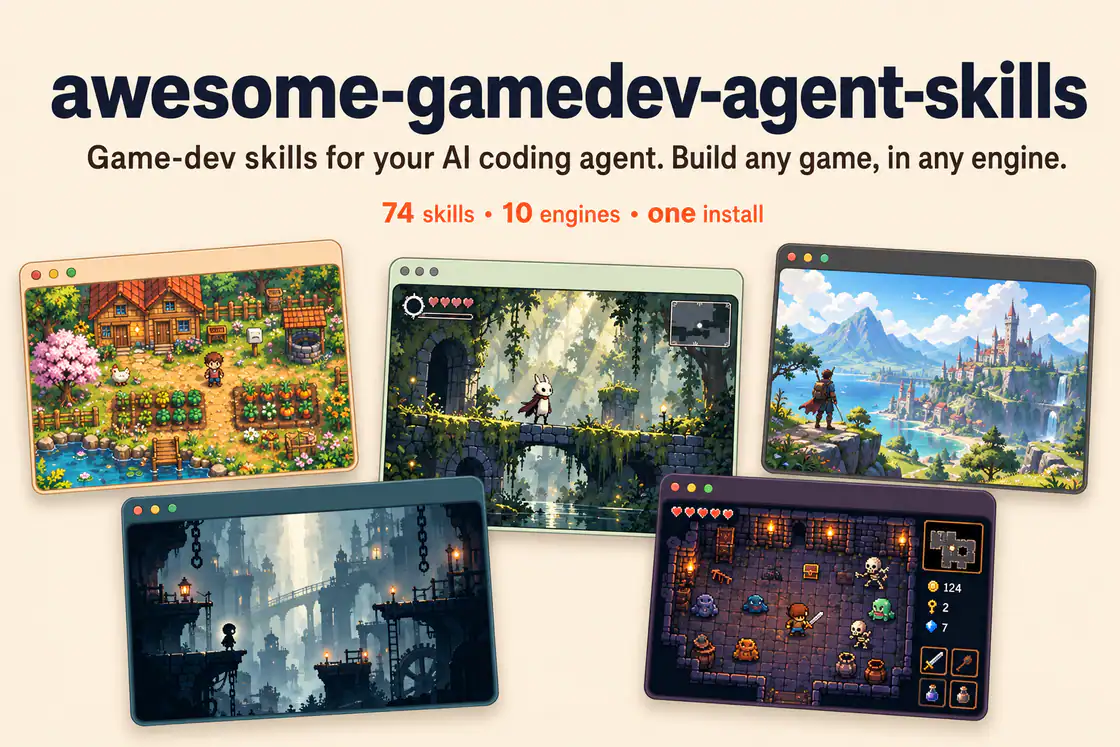
Author-provided banner showing five game scenes. Its 74-skill label reflects an earlier edition; the reviewed catalog contains 76 specialized skills plus a router.
Project screenshotsAbout this Skill
Separate board state from rendering and implement move rules, match detection, cascades, scoring, and undo.
Why we picked it
Provides a focused workflow, implementation patterns, and common failure checks for grid & match-3 puzzle games. Pair it with the detected engine and any related systems required by the task.
What it helps with
- Use when your game task needs grid & match-3 puzzle games.
What this skill helps you build
Separate board state from rendering and implement move rules, match detection, cascades, scoring, and undo.
Patterns in the upstream playbook
The entrypoint covers: Board model + match detection (logic separate from visuals); Resolve → collapse → refill → cascade (repeat to stability); Undo via state snapshot or command.
Use it in your project
Inspect the existing project
Describe the desired behavior and share the relevant project files, engine version, and current failure or target result.
Apply the focused playbook
Separate board state from rendering and implement move rules, match detection, cascades, scoring, and undo.
Verify in the matching runtime
Run the project or workflow with its actual dependencies and check the changed behavior before accepting the result.
Original puzzle instructionsEngine versions and upgrade policy
Shared collection installation
Install the complete upstream collection with its router and keep each skill’s bundled references, scripts, and assets. The dispatcher selects an engine and the smallest relevant task set; a member listing is a focused entry into that shared package.
| Command | What it helps with |
|---|---|
npx skills add gamedev-skills/awesome-gamedev-agent-skills | Keep the router and supporting skill folders available together. |
Before you use it
- A chosen engine and its development environment. Genre playbooks compose engine and discipline skills from the same collection.
Supported agents
Sources & references
Original sources are linked below. Practical starting points are editorial suggestions from SkillHey.