Explore a question through Socratic dialogue, rationality and systems-thinking prompts.
7Stars0Forks
Repository last pushed
These skills help an agent surface assumptions and compare choices before a commitment. Members include decision records, thinking sessions, theory grounding, opportunity analysis, councils, and perspective prompts.
26 skillsExplore a question through Socratic dialogue, rationality and systems-thinking prompts.

Reconstruct a paper’s reasoning, experimental design and evidence limits, with worked examples for key formulas.
Use an Adlerian psychology framework to examine procrastination or interrupted action when you already know what you intend to do.

Run structured rounds of questions to resolve the branches of a decision.
Build local records for decisions that need follow-up, including assumptions, outcomes, current state, and later review.
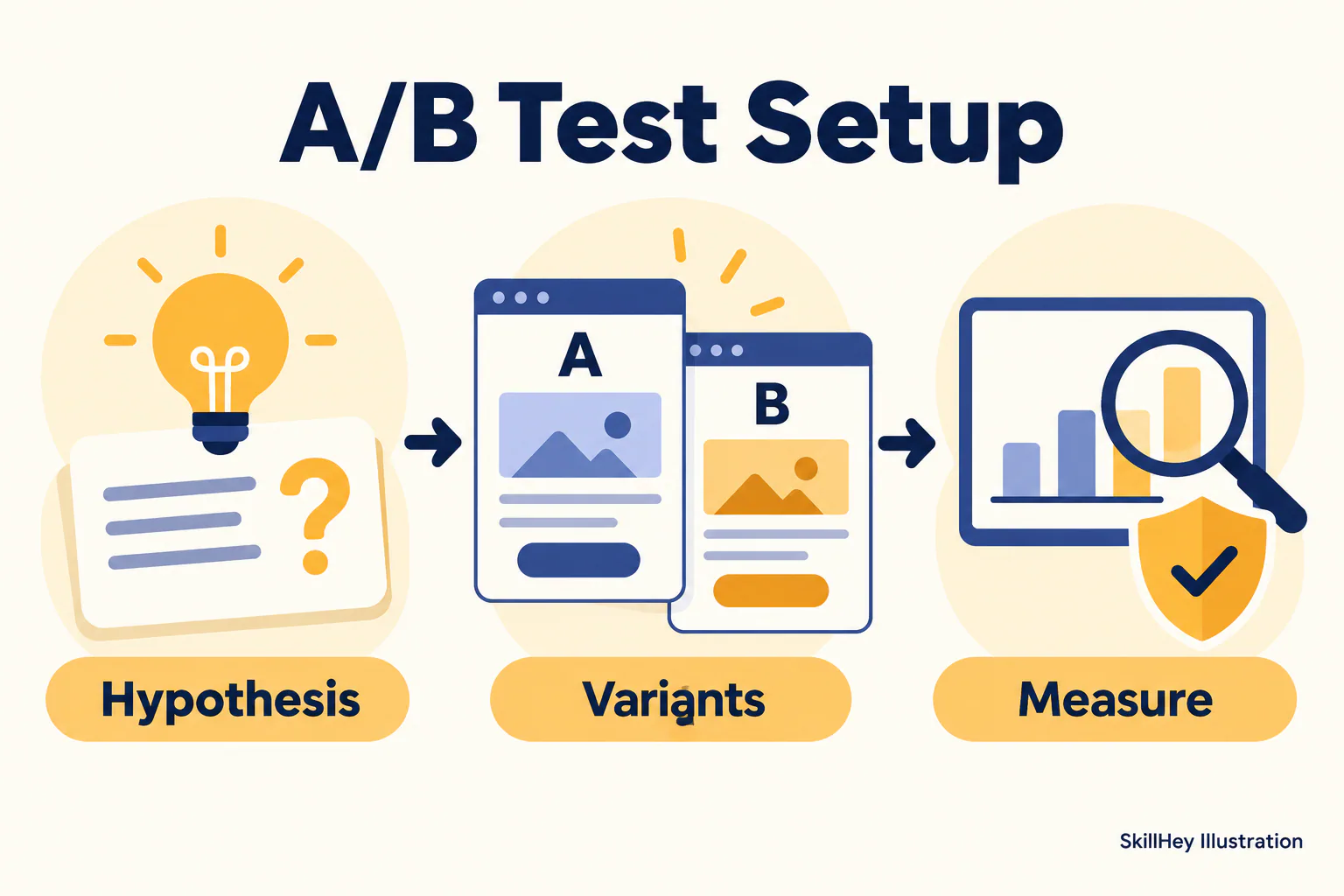
Apply behavioral models to messaging and decisions while testing assumptions against evidence.
A project template for researching, comparing and reporting strategic opportunities through coordinated research sprints.
Recommend or use named experts to simulate a multi-role discussion on a topic and summarize their disagreements.
Develop a goal-oriented strategy using assumptions, backcasting and phased plans.
Compare perspectives from configured thinker personas to examine complex decisions and record a reasoned outcome.
Plan a page-by-page funnel, pricing sequence, measurement needs and build order.
Simulate different marketing lenses, surface disagreements and synthesize a decision with sources.

Examine uncertainty through asymmetric risks, antifragility, skin in the game, subtraction and domain boundaries.
Check understanding through concrete examples, experiments, uncertainty and the distinction between naming and explaining.
Apply a configured scoring rubric to researched opportunities.
Identify strategic opportunities from company capabilities and client context.
Examine work and life choices through specific knowledge, leverage, long-term compounding and the costs of desire.
Add a few specific reflection questions after actionable answers to help examine facts and assumptions.
Cross-examine non-trivial engineering decisions using fresh-context adversarial review and explicit stop conditions.
Six Claude Code workflows for research, forecasting, strategy, customer profiles, structured thinking and venture assessment.

Research everyday decisions against the Chinese How to Live Better guide, with source references, costs and evidence levels.
Examine a claim before matching it to a credible theory, then reinterpret the case and state where the explanation applies and where it fails.
Clarify vague business concepts and distinguish meanings using Wittgenstein and Austrian economics as analytical frameworks.
Review decisions with a latticework of mental models, inversion, incentives, cognitive biases and a circle of competence.
Examine AI research directions, generalization, scaling and the relationship between capabilities and safety.
Examine engineering assumptions, costs and processes with first principles, physical limits and iterative simplification.
Use concept or theory skills when the question is fuzzy, scoring or opportunity skills when choices need ranking, and a decision record when the conclusion must remain findable.